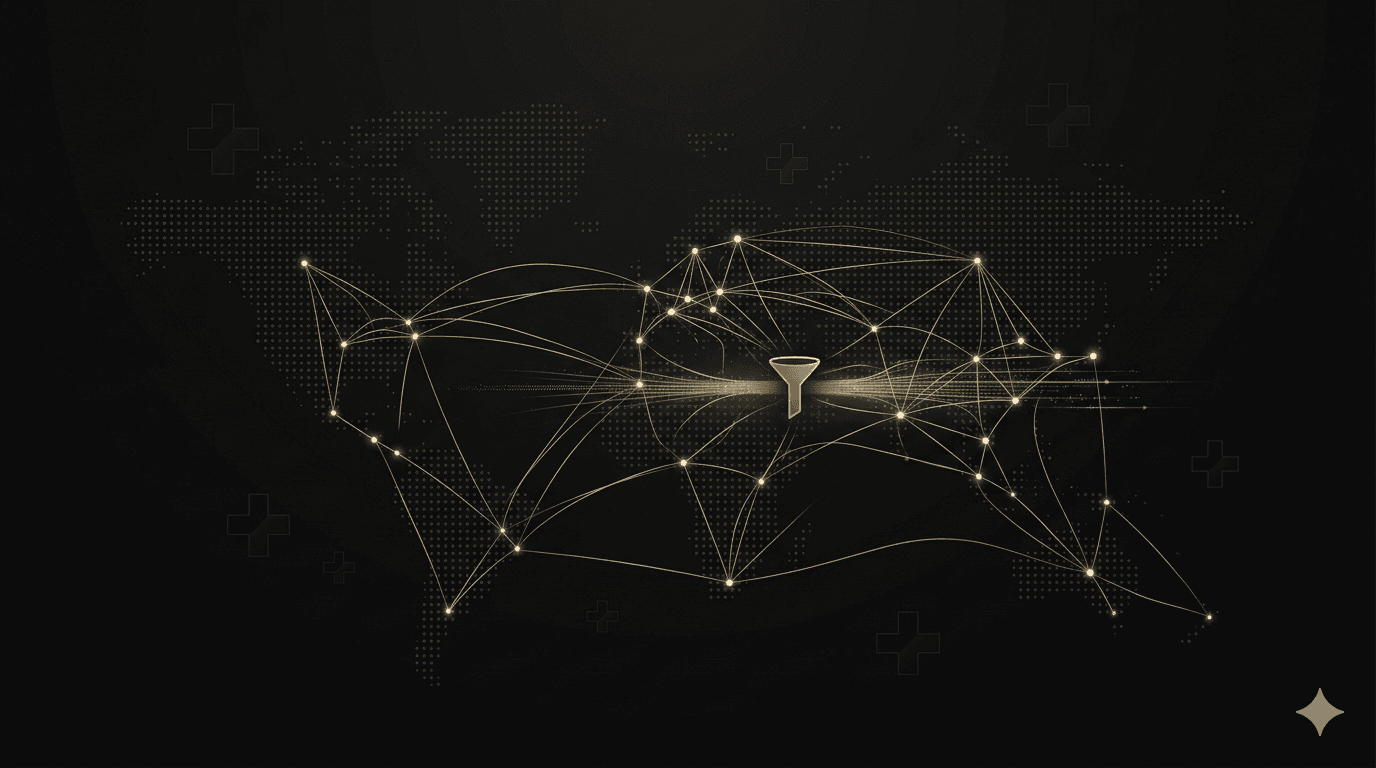
Data quality incidents cut by roughly 60 percent across 26 regulated markets
The Situation
A European pharmaceutical distribution business fed its central warehouse from source systems across 26 markets. Every market had its own systems, formats, and habits.
Bad data flowed downstream and was discovered where it costs the most: in management reporting and in submissions that regulators read. Each incident meant tracing the error back through the pipeline by hand.
Why it was hard
In a regulated business, a reporting error is not an inconvenience, it is exposure. The cost of a data quality incident scales with how far downstream it travels before someone catches it.
Twenty six markets could not be forced onto one source system. The fix had to accept messy inputs and still guarantee clean outputs.
What Was Built
A single data quality gateway between all source systems and the warehouse: every record passes through validation before it can land.
Failures are caught at the gate, quarantined, and reported to the owning market with the reason attached, so fixes happen at the source instead of downstream.
Quality became a measured, visible metric per market instead of an assumption.
The Results
What This Means For You
Most AI programs fail on exactly this: data nobody downstream can trust. If you are about to build AI on top of messy, multi-source data, find out now whether it will hold. That is the first thing the audit checks.
Not sure where you stand? Take the free AI Readiness Calculator →